The article, “How Exercise Affects Our Memory” by Gretchen Reynolds emphasizes the positive impacts of exercise on our memory and cognitive ability. As exercise undoubtedly has countless impacts on our physical health, this article is intriguing as it discusses research on how physical activity affects our brain. Reynolds discusses how exercise can increase the size of the hippocampus, which is essential to memory. Reynolds initially discusses a study conducted by researchers at University of Maryland, in which they observed the long-term effects of exercise on semantic-memory processing. They found that exercise increased the brain’s efficiency in processing memories.
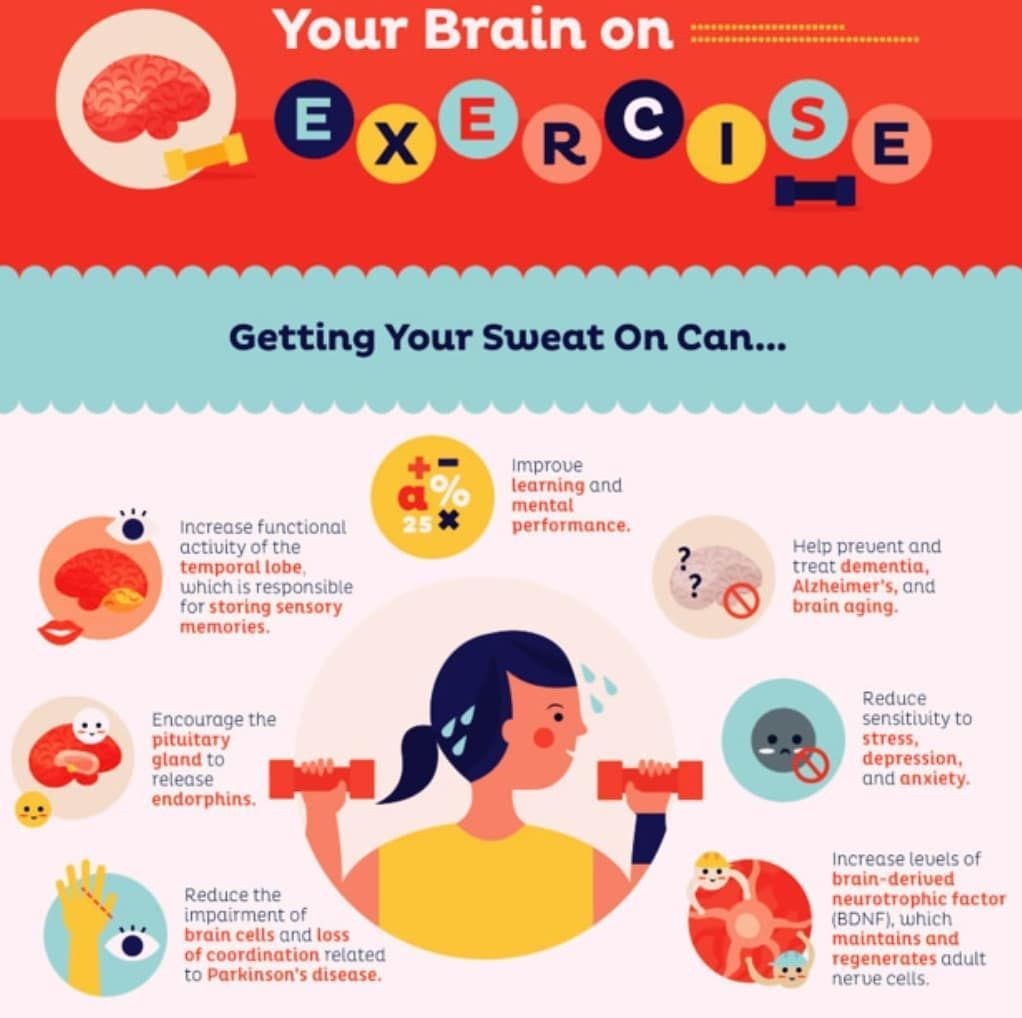
Reynolds also discusses a second study, which discovered how exercise literally exercises our brain. The scientists assumed that the semantic-memory parts of the brain would not be as active after exercise. However, these parts of the brain were very active. This led the scientists to conclude that initial exercise must first stimulate parts of the brain, in order to effectively train them into eventually using less energy to work. This discovery was very alarming, yet intriguing to me. It leads me to question what specific biochemicals and neurotransmitters play a role in this effect?
In my public health ecologies course, we learned about how stress impacts the brain. When our brains are constantly overly secreting cortisol, our main stress hormone, it damages our brains and bodies. Our bodies are in a constant state of fright or flight, and our prefrontal cortex may start to shrink. Exercise levels cortisol and decreases the negative effects of stress. My question in response to these studies include: Are some types of exercise more efficient in working the brain than others? Would low intensity workouts, such as yoga, be as efficient as running in reducing physiological stress?
 Feda's Blog