Be yourself; Everyone else is already taken.
— Oscar Wilde.
This is the first post on my new blog. I’m just getting this new blog going, so stay tuned for more. Subscribe below to get notified when I post new updates.
Be yourself; Everyone else is already taken.
— Oscar Wilde.
This is the first post on my new blog. I’m just getting this new blog going, so stay tuned for more. Subscribe below to get notified when I post new updates.
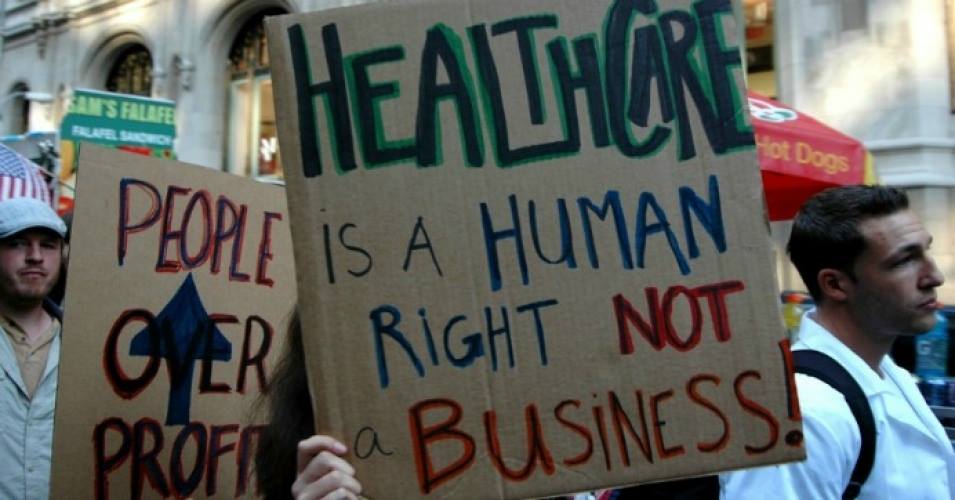
In the article, “Is Health Care a Right?”, Atul Gawande illustrates the irony in which many people from his hometown were opposed to universal healthcare, although many faced several health challenges themselves. Through their stories we are able to understand their emotion and reasoning. Leaning more conservative, many of them believe health care should be earned through hard work. This principle is rooted in the basic American value of individualism. When Mark no longer opposed the requirement that people get insurance coverage, he stated, “But that doesn’t mean I have to sign on for full-blown socialism—cradle-to-grave everything.” This portrays how many people fear the idea of “Medicaid for All” because they see it as part of socialist culture. Furthermore, the article does an admirable job of providing relevant history on American healthcare and medical discoveries. It emphasizes the need for finding a common ground.
Although the article was lengthy, I believe it was a very important read. This article helped me further understand the logic behind people opposed to Obamacare and Medicare for All. Exploring different perspectives is important in strengthening your own. I still firmly believe healthcare is a right, and should be provided by the state regardless of one’s “work ethic” or contribution. I do not believe anybody should be stuck paying thousands of dollars, or avoid seeking care, just because they cannot afford it. However, the market-driven and individualistic values of the American healthcare system make me lack faith in ever receiving a universal healthcare system. Furthermore, I am interested in the author’s background, as well as his suggestions towards a system moving forward. I am interested in learning what we can do, as students and public health leaders, in promoting a more equitable health system.
The article, “How Exercise Affects Our Memory” by Gretchen Reynolds emphasizes the positive impacts of exercise on our memory and cognitive ability. As exercise undoubtedly has countless impacts on our physical health, this article is intriguing as it discusses research on how physical activity affects our brain. Reynolds discusses how exercise can increase the size of the hippocampus, which is essential to memory. Reynolds initially discusses a study conducted by researchers at University of Maryland, in which they observed the long-term effects of exercise on semantic-memory processing. They found that exercise increased the brain’s efficiency in processing memories.
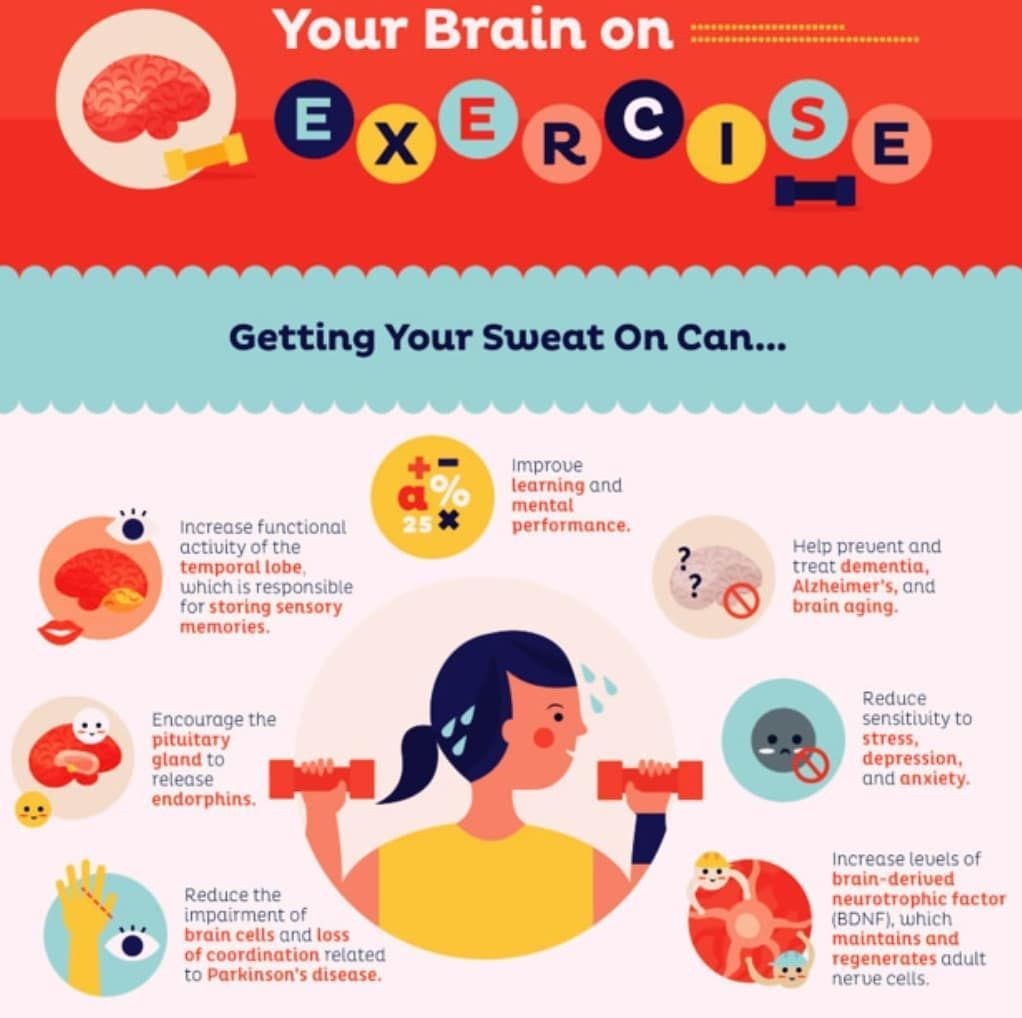
Reynolds also discusses a second study, which discovered how exercise literally exercises our brain. The scientists assumed that the semantic-memory parts of the brain would not be as active after exercise. However, these parts of the brain were very active. This led the scientists to conclude that initial exercise must first stimulate parts of the brain, in order to effectively train them into eventually using less energy to work. This discovery was very alarming, yet intriguing to me. It leads me to question what specific biochemicals and neurotransmitters play a role in this effect?
In my public health ecologies course, we learned about how stress impacts the brain. When our brains are constantly overly secreting cortisol, our main stress hormone, it damages our brains and bodies. Our bodies are in a constant state of fright or flight, and our prefrontal cortex may start to shrink. Exercise levels cortisol and decreases the negative effects of stress. My question in response to these studies include: Are some types of exercise more efficient in working the brain than others? Would low intensity workouts, such as yoga, be as efficient as running in reducing physiological stress?
The article “Stigmas, stereotypes and sickle cell disease” by Christen A. Johnson is highly intriguing and informative in addressing the complexities of sickle cell disease and the ways it disproportionately impacts Black people, and Black men specifically. Johnson discusses the experiences of Marqus Valentine, who was diagnosed with sickle cell as a baby. As a child, Valentine’s peers avoided him due to his condition. Social isolation is one of the ways in which the disease creates emotional hardship as well. When discussing sickle cell disease, it is vital to recognize the impact of race.
The lack of adequate action, research, and treatment for sickle cell disease is undoubtedly a matter of social justice and racism. TaLana Hughes, executive director of Sickle Cell Disease Association of Illinois, discusses how there is no official registry for sickle cell, a significant barrier to measuring the prevalence and impact of this disease. It angered me to learn that the severity of this issue is often diluted by labeling it “a black disease.” As a Palestinain woman, I am very familiar with the ways health and needs of people are dismissed. Palestinian’s face many public health issues: lack of access to healthcare and education, pollutants from chemical weaponry, barriers to transportation due to apartheid and occupation, and high prevalence mental health issues as a result of being exposed to violence. The needs of Palestinians are often dismissed due to the “political complexity” of the military occupation and the dehumanization of Palestinians.
The article also discussed how patients with sickle cell criminalized patients by accusing them of being drug addicts. This is extremely infuriating and demonstrates the blatant lack of empathy and evident racism within the system. Elijah Powell, a 24 year old patient with sickle cell, discusses the stigma of the disease and how it impacts body image. The disease leaves the body depleted and weak, which can be defeating as men face a certain pressure to display strong, masculine bodies. When learning about this, many questions arise for me. How does the struggle of not being able to fit a “masculine” body type impact the emotional well-being of Black men struggling with sickle cell? What mental support is being offered to patients in order to cope with the emotional impact of this disease due to physical hardships and blatant racism?
I am inspired me to learn more about the impact of sickle cell disease on Black communities who face an abundance of overlapping struggles within this complex issue. As a board member of UIC’s Women’s Health Initiative, we focus on how certain health issues disproportionately affect women, specifically Black women and women of color. I am appreciative of the insight this article has provided me on certain health conditions that can disproportionately impact Black men. I am frustrated at this disparity, but empowered to ask- What can I do in order to advocate for increased research and treatment for this disease, as well as support communities?
This is an example post, originally published as part of Blogging University. Enroll in one of our ten programs, and start your blog right.
You’re going to publish a post today. Don’t worry about how your blog looks. Don’t worry if you haven’t given it a name yet, or you’re feeling overwhelmed. Just click the “New Post” button, and tell us why you’re here.
Why do this?
The post can be short or long, a personal intro to your life or a bloggy mission statement, a manifesto for the future or a simple outline of your the types of things you hope to publish.
To help you get started, here are a few questions:
You’re not locked into any of this; one of the wonderful things about blogs is how they constantly evolve as we learn, grow, and interact with one another — but it’s good to know where and why you started, and articulating your goals may just give you a few other post ideas.
Can’t think how to get started? Just write the first thing that pops into your head. Anne Lamott, author of a book on writing we love, says that you need to give yourself permission to write a “crappy first draft”. Anne makes a great point — just start writing, and worry about editing it later.
When you’re ready to publish, give your post three to five tags that describe your blog’s focus — writing, photography, fiction, parenting, food, cars, movies, sports, whatever. These tags will help others who care about your topics find you in the Reader. Make sure one of the tags is “zerotohero,” so other new bloggers can find you, too.

 Feda's Blog